Initially, Meg becomes the protagonist of a cheap joke - talk-show host David Letterman starts calling offices in the adjacent building. TV cameras peer into the offices through blinds; the first person to answer the phone receives a prize: "Employee of the Month" - a luxurious men's suit.
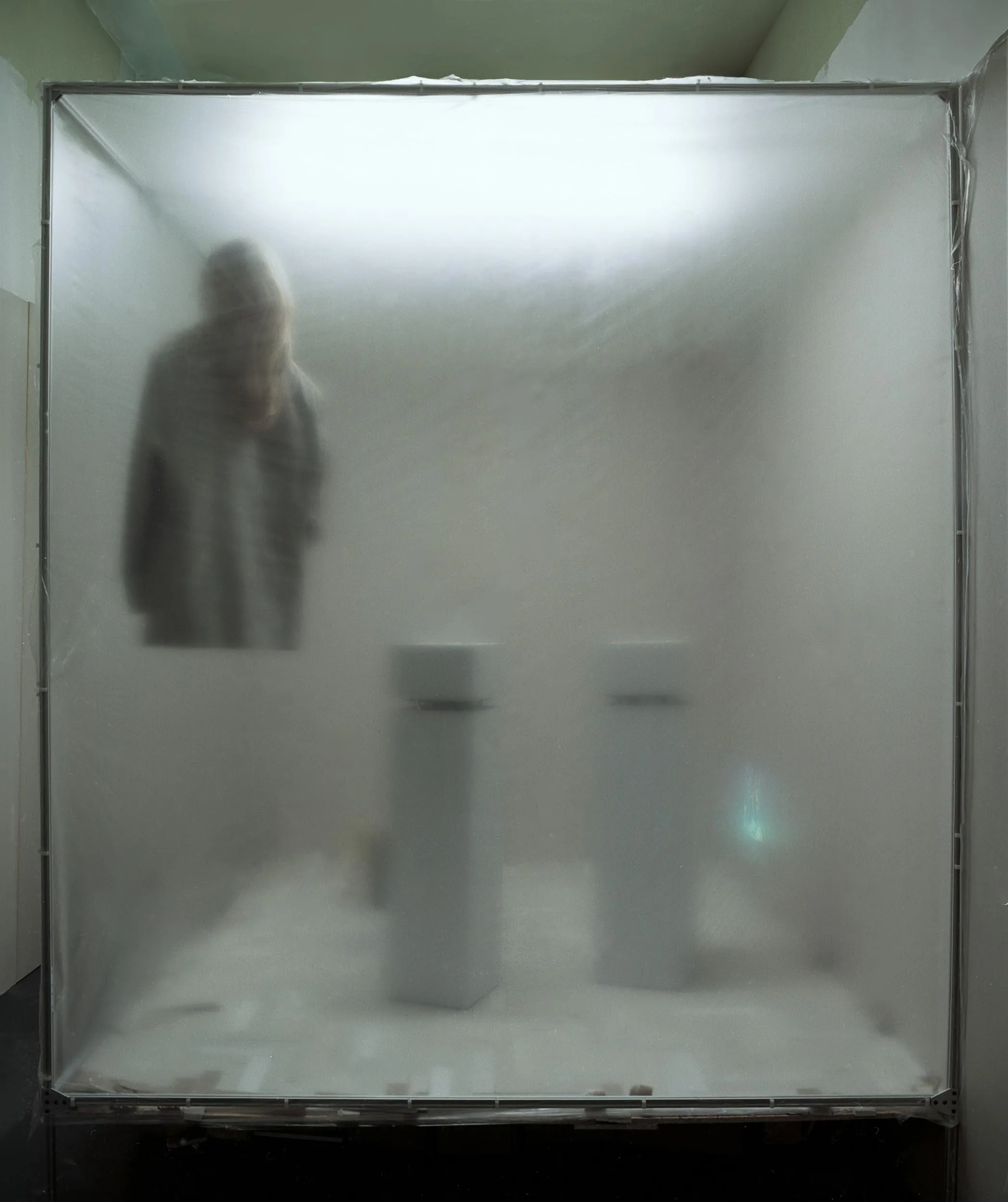
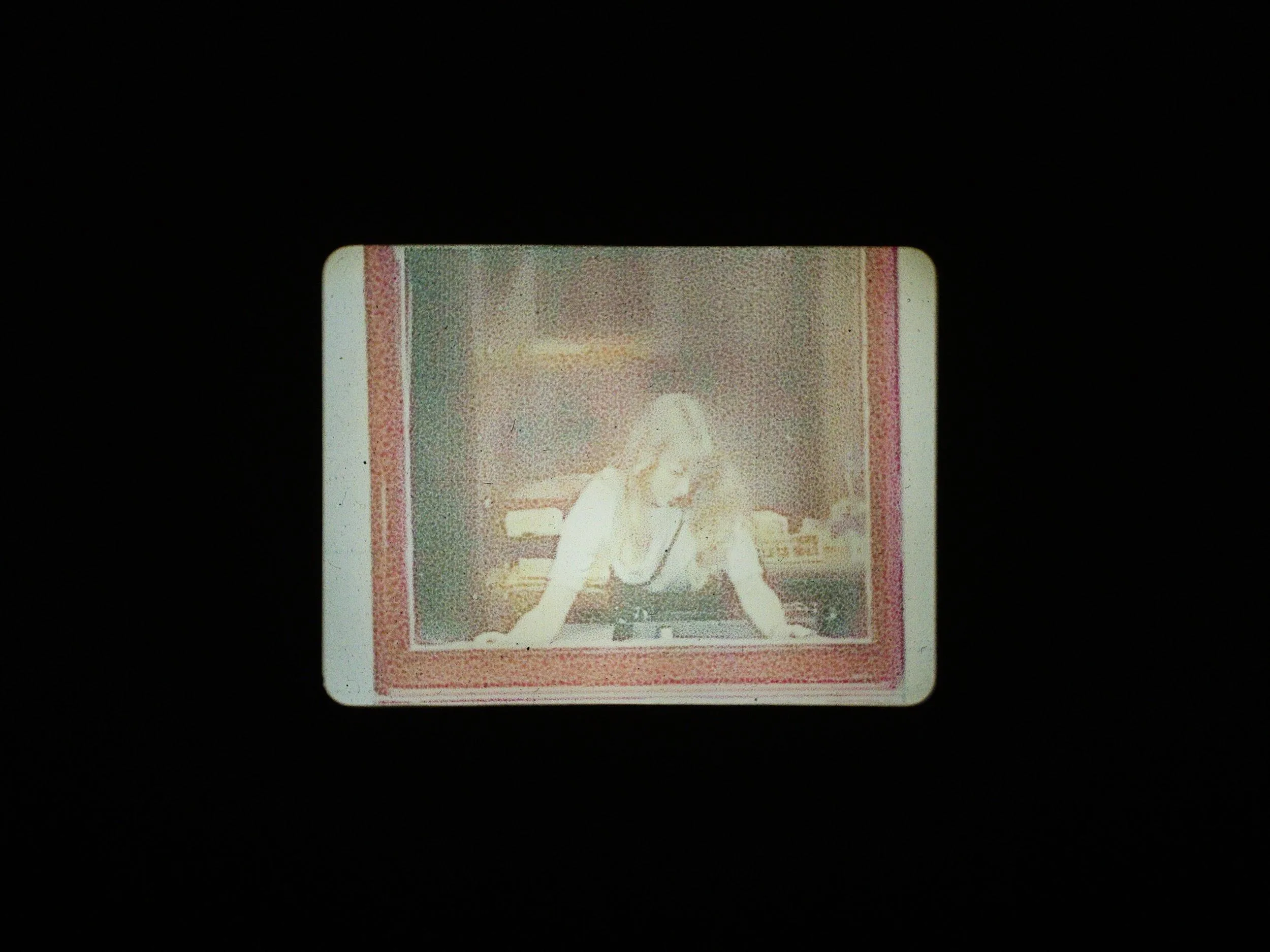
Meg Parsont - reluctant to talk on air - doesn't believe it's really Dave. He tries to get her consent: “Can I put you on the air?”. A moment later, the show's director says from off-screen: "Dave, she said yes." We hear Meg's first words on air: “I didn't really say yes…”. This pattern, known as "manufacturing consent," is repeated multiple times throughout the 32 conversations, the symbol of which becomes her blonde hair seen through the glass ("Most beautiful hair on TV!"). The director encourages Dave to make subsequent calls. With each call, he invents new, strange tasks for her, with which she (we hear it) feels uneasy, but never refuses.
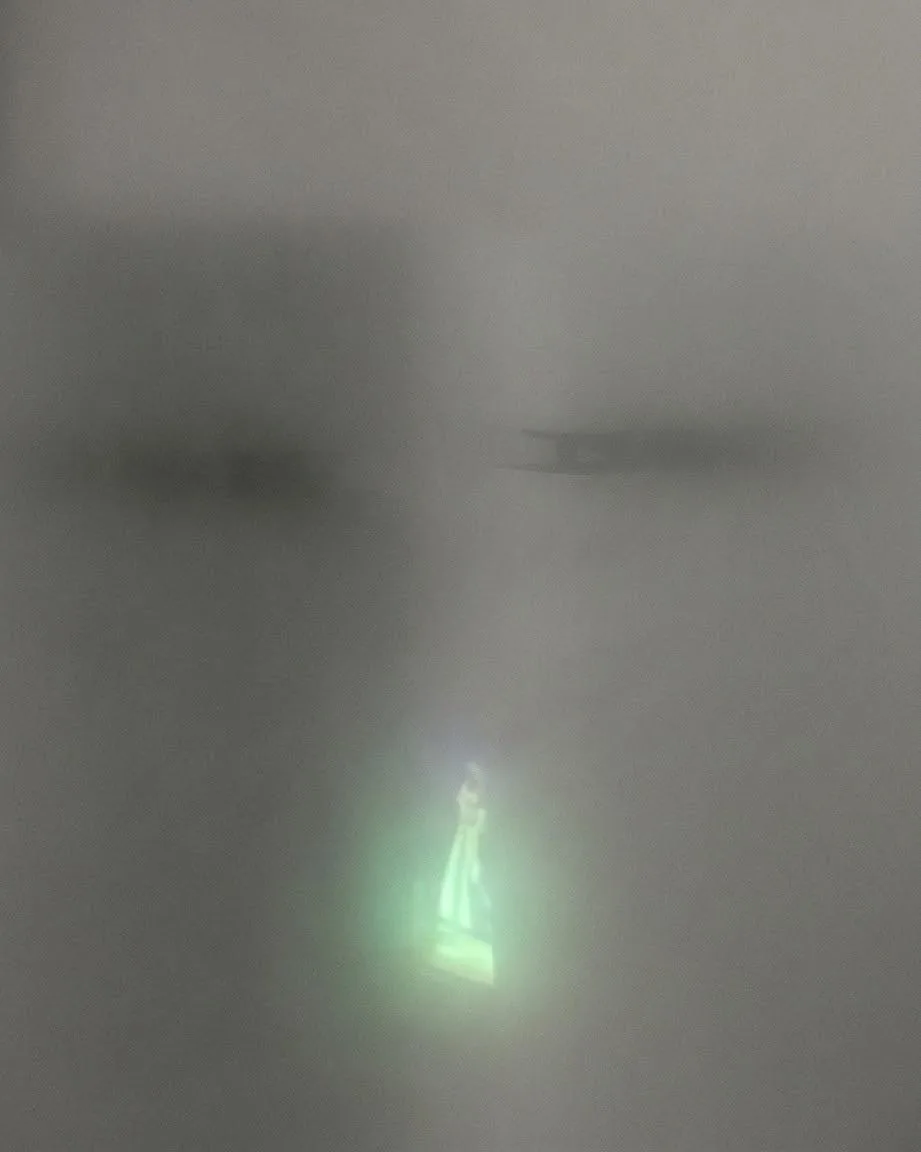
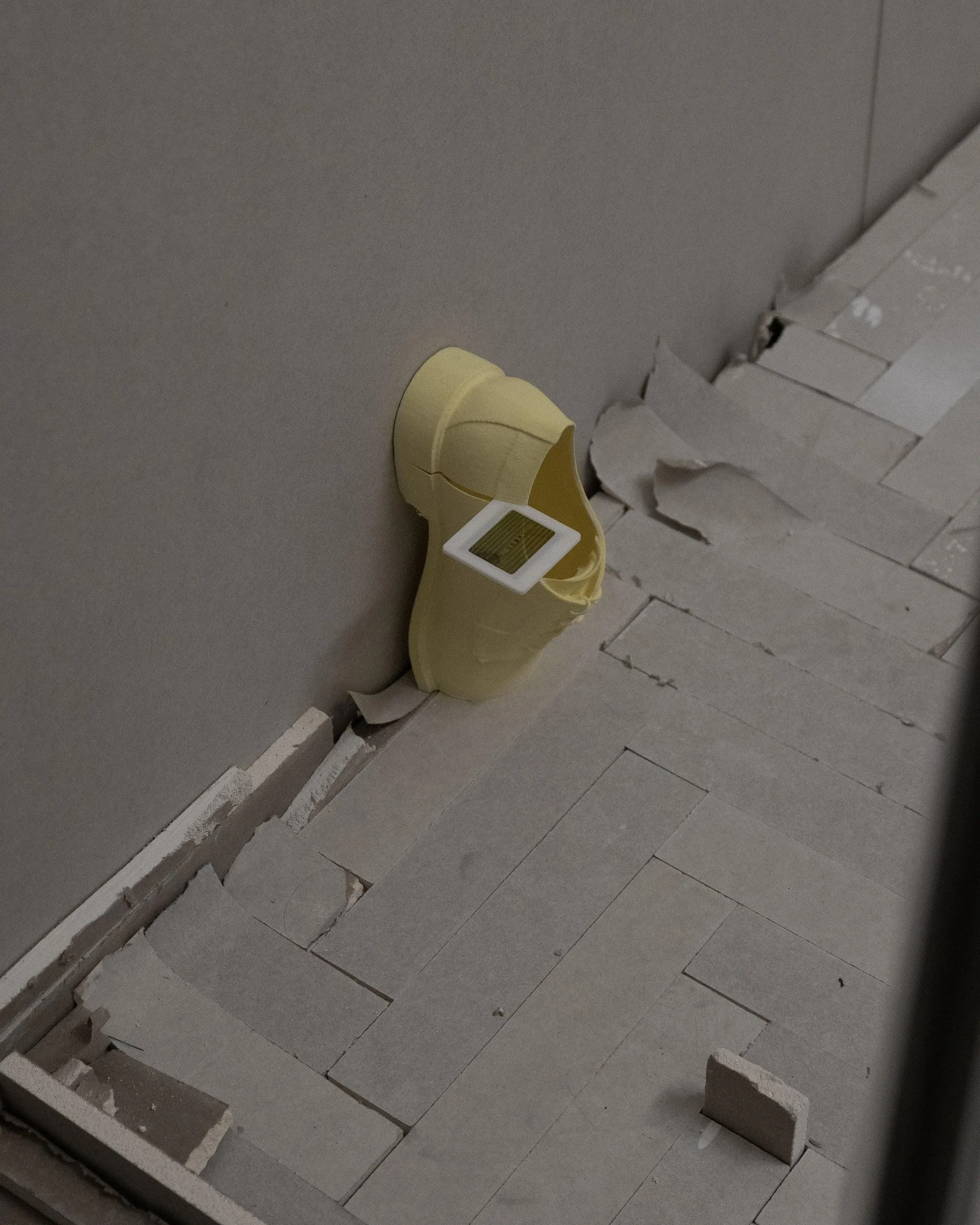
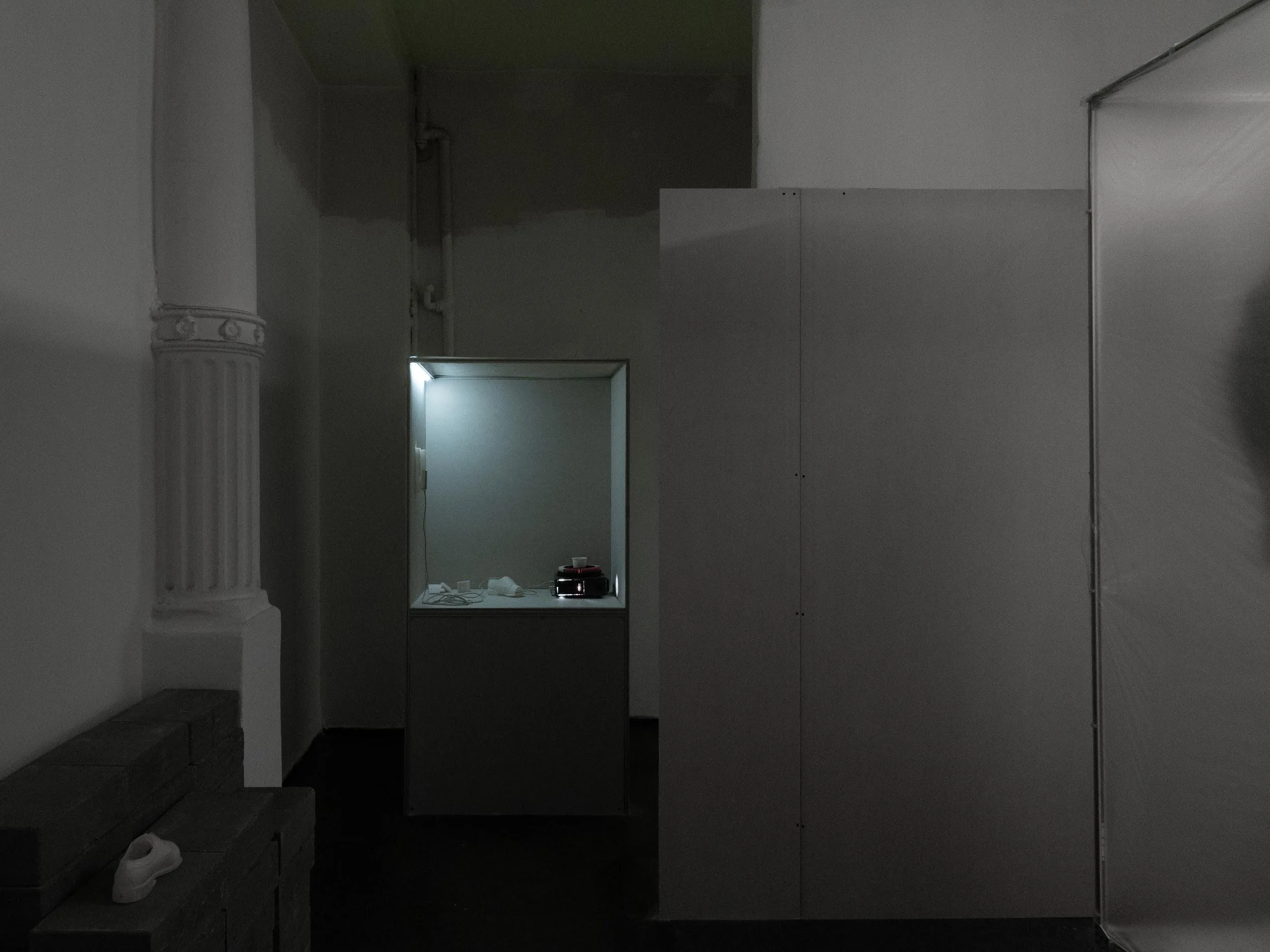
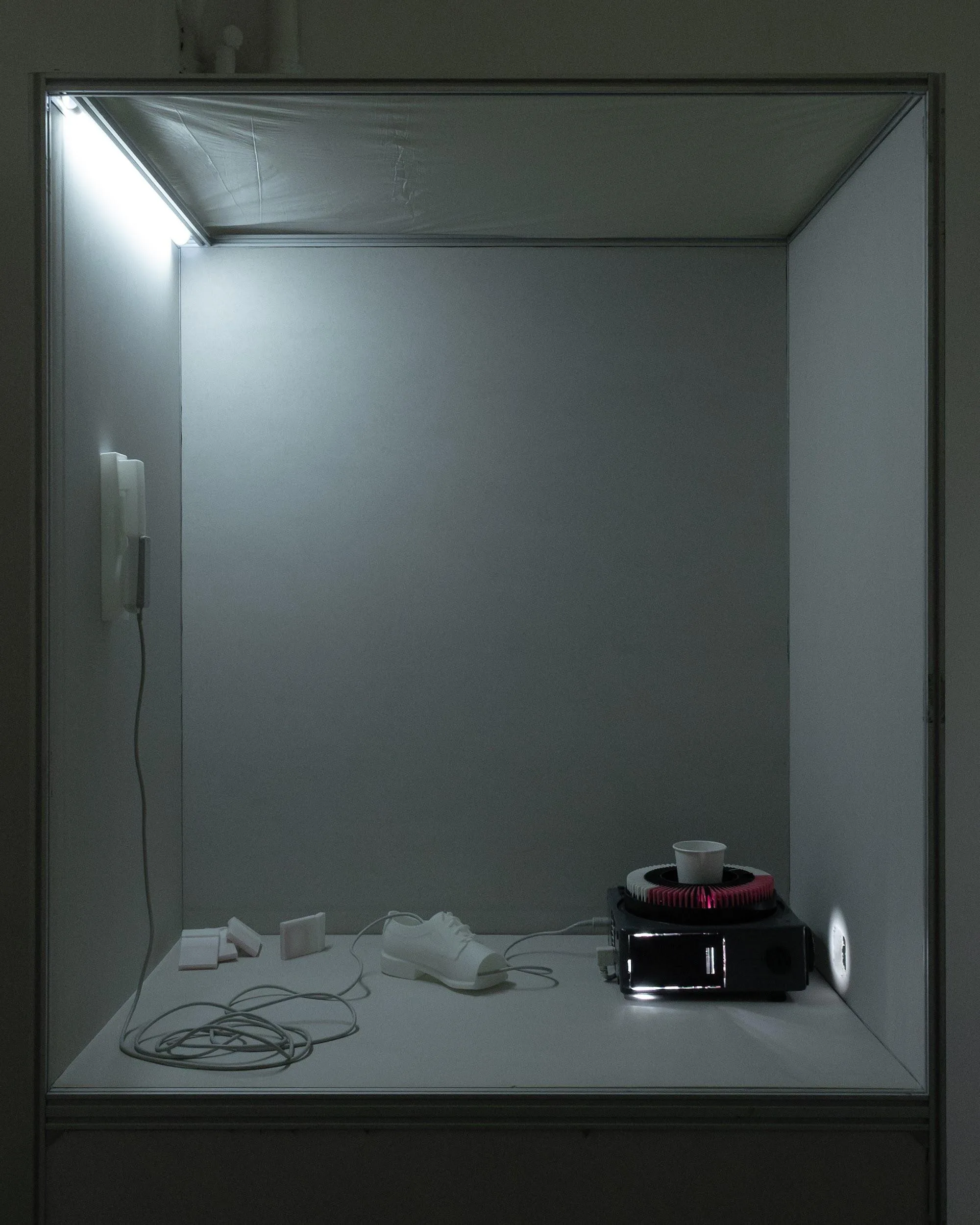
The two-part installation is a variation on themes from archival recordings of Late Show with David Letterman - an object resembling an intercom serves as a remote control for switching slides, on which Meg performs a camera-facing performance designed by Letterman. Fragments of the archives are placed inside the works. Objects, ready-mades (white skyscraper-speakers, a spy shoe-phone, blonde hair seen through blurry glass) originate from Letterman's interactions with Meg on air or symbolically refer to the specific dynamic based on soft forms of power present in the media.